The Himalayan singing bowl tradition encompasses eight primary morphological families, each offering a distinct acoustic profile and harmonic signature. By understanding the structural and historical nuances of Jambati, Ultabati, Thadobati, and Mani bowls, we can make highly intentional choices in our sound work.
While researchers have cataloged nearly 50 variations of Himalayan singing bowls, modern collections are largely defined by eight main families. Examining the physical shape, metal thickness, and authentic historical dating of these bowls reveals exactly how their unique overtones are generated. Let's look closely at the first four of these essential families.
Jambati
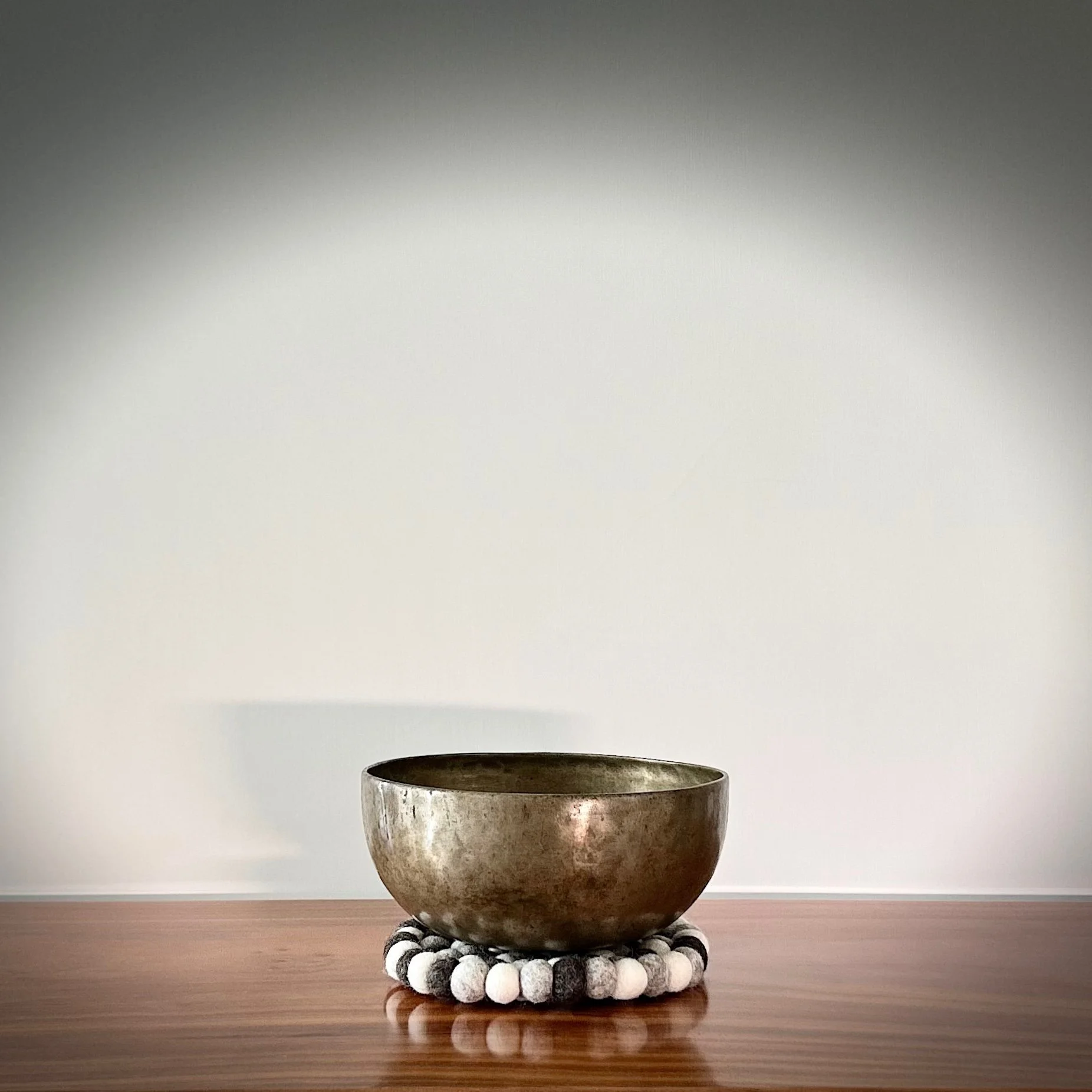
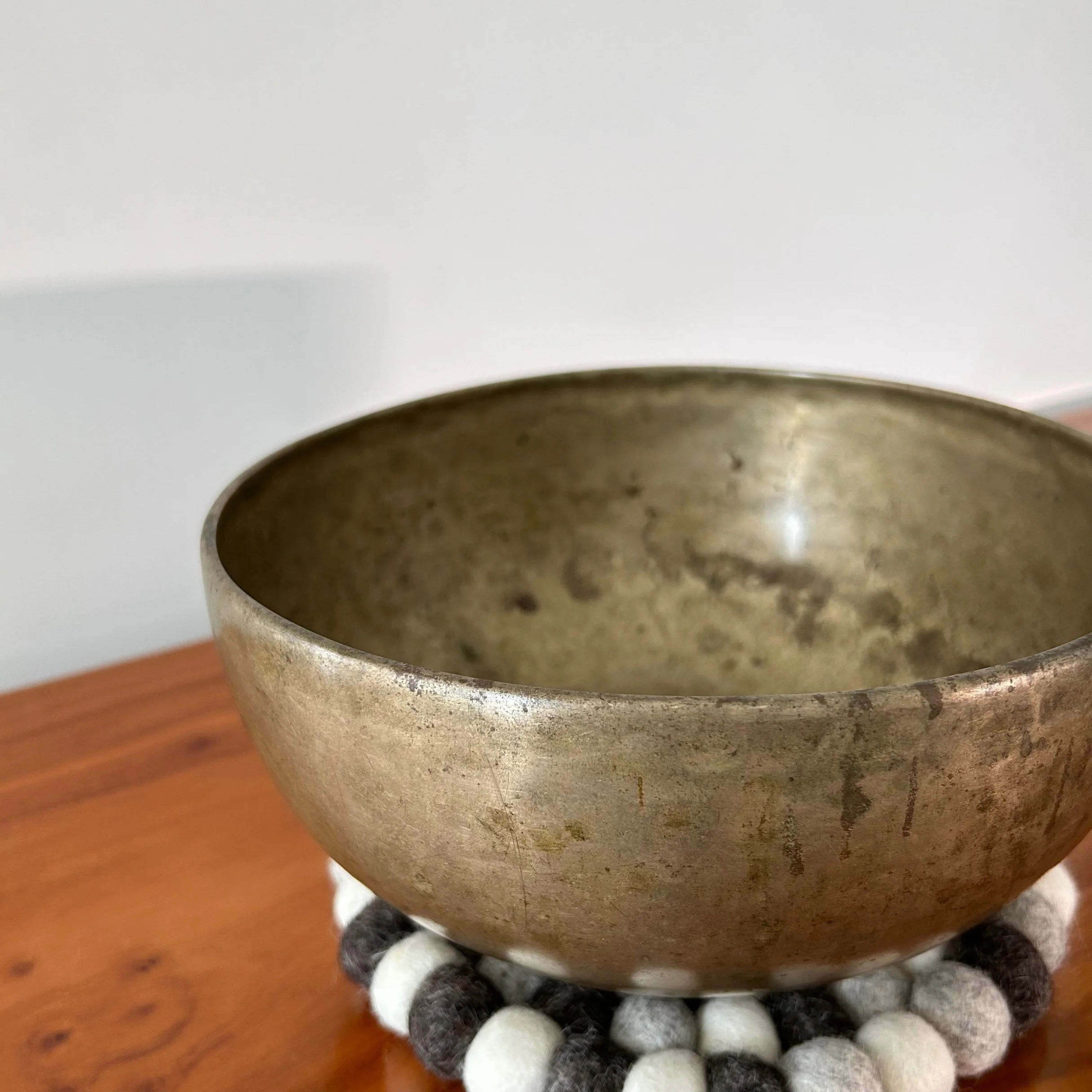
Jambati bowls are large and graceful, featuring mesmerizing hammer marks that scatter light beautifully. As you can see in the picture of my very first Jambati, they have a wide, stable base. In the sound spectrum image below, I have circled the acoustic breakdown in purple. The peak on the left is the deep fundamental tone, while the peaks on the right represent a rich, chord-like wash of complex overtones.
Strike with a large, soft mallet to isolate the grounding fundamental tone.
Use a smaller, harder ringer to activate the shimmering upper frequencies.
Utilize their wide bases for comfortable on-body placements (best to avoid for larger and heavier Jambati).
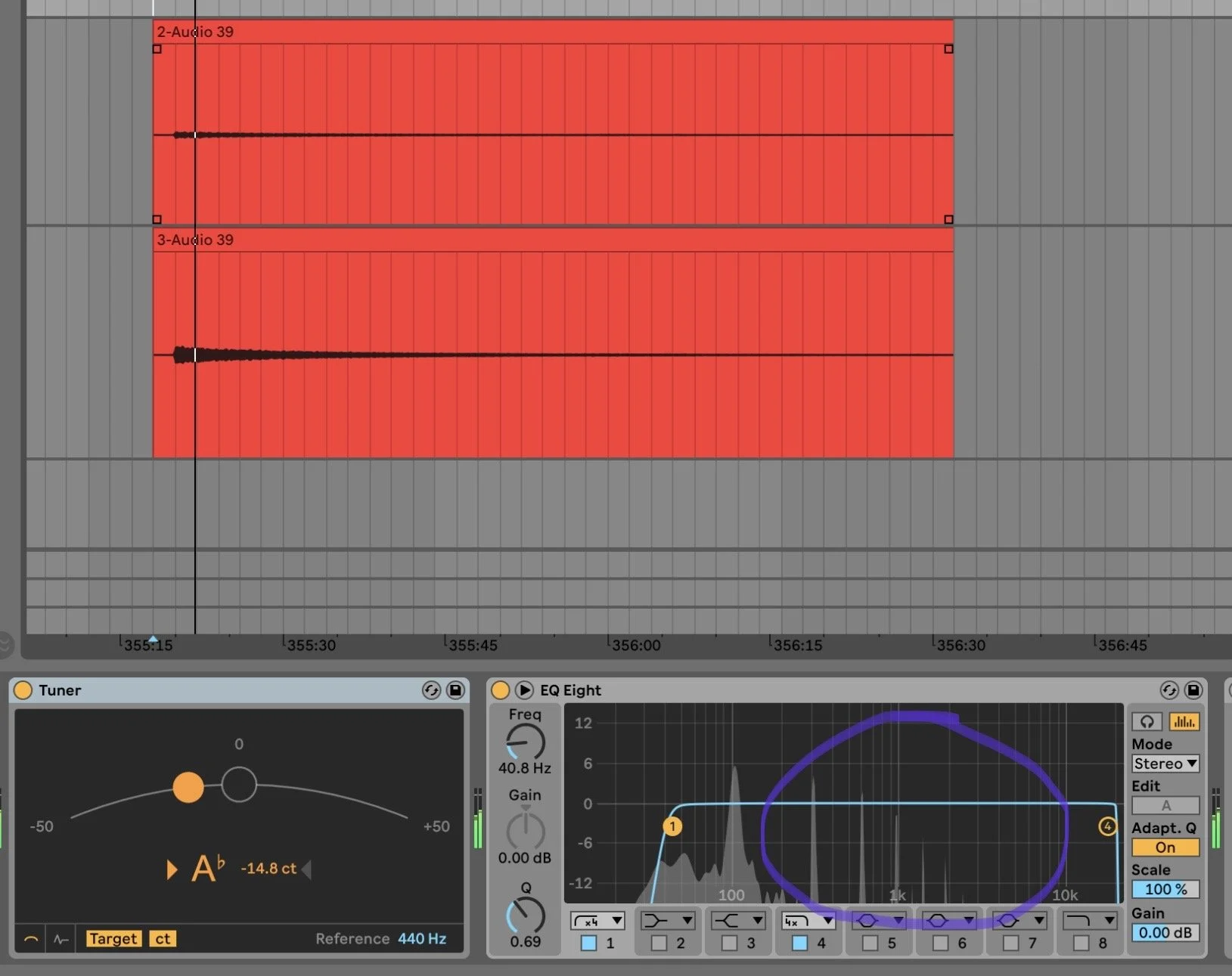
Jambati bowl spectrum
Ultabati
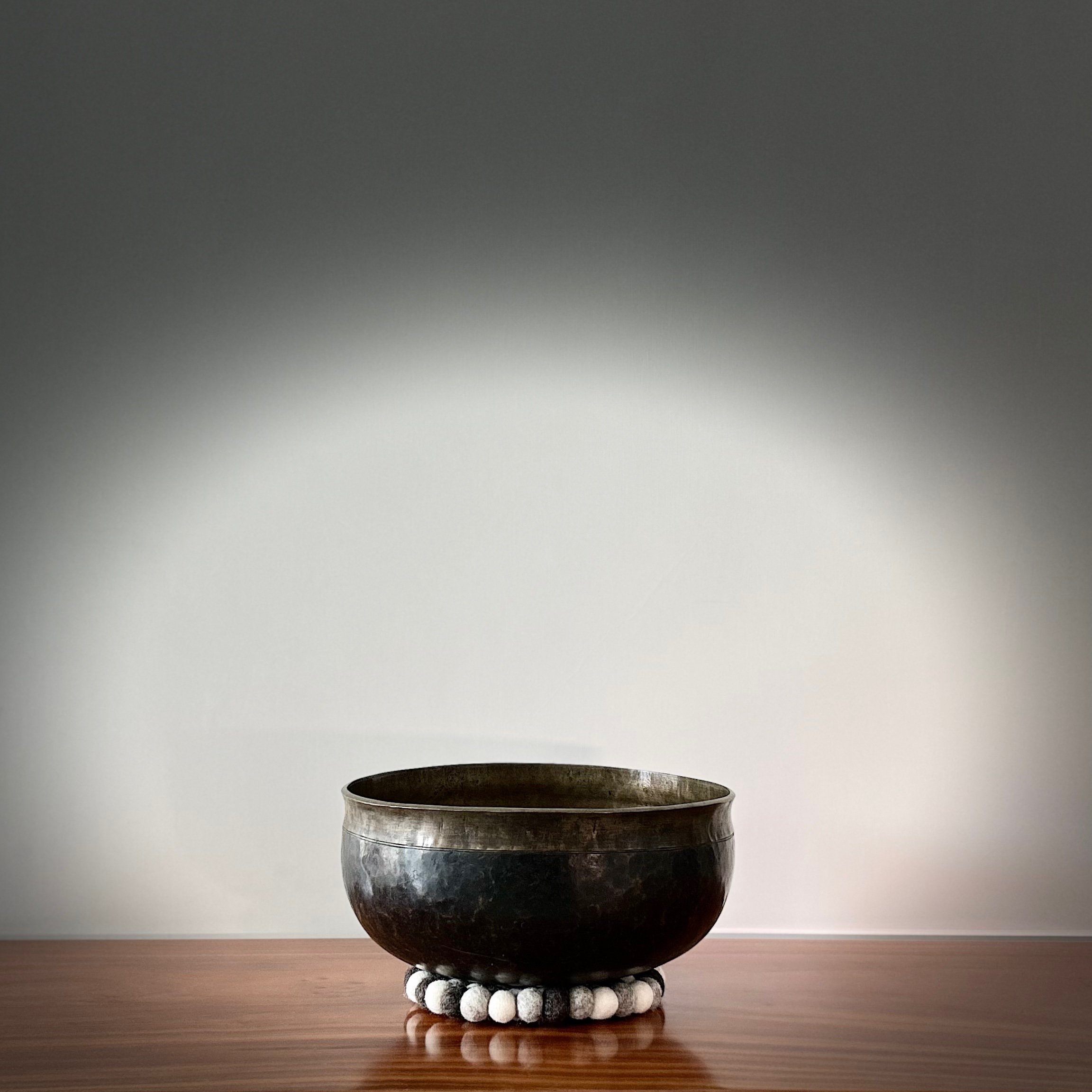
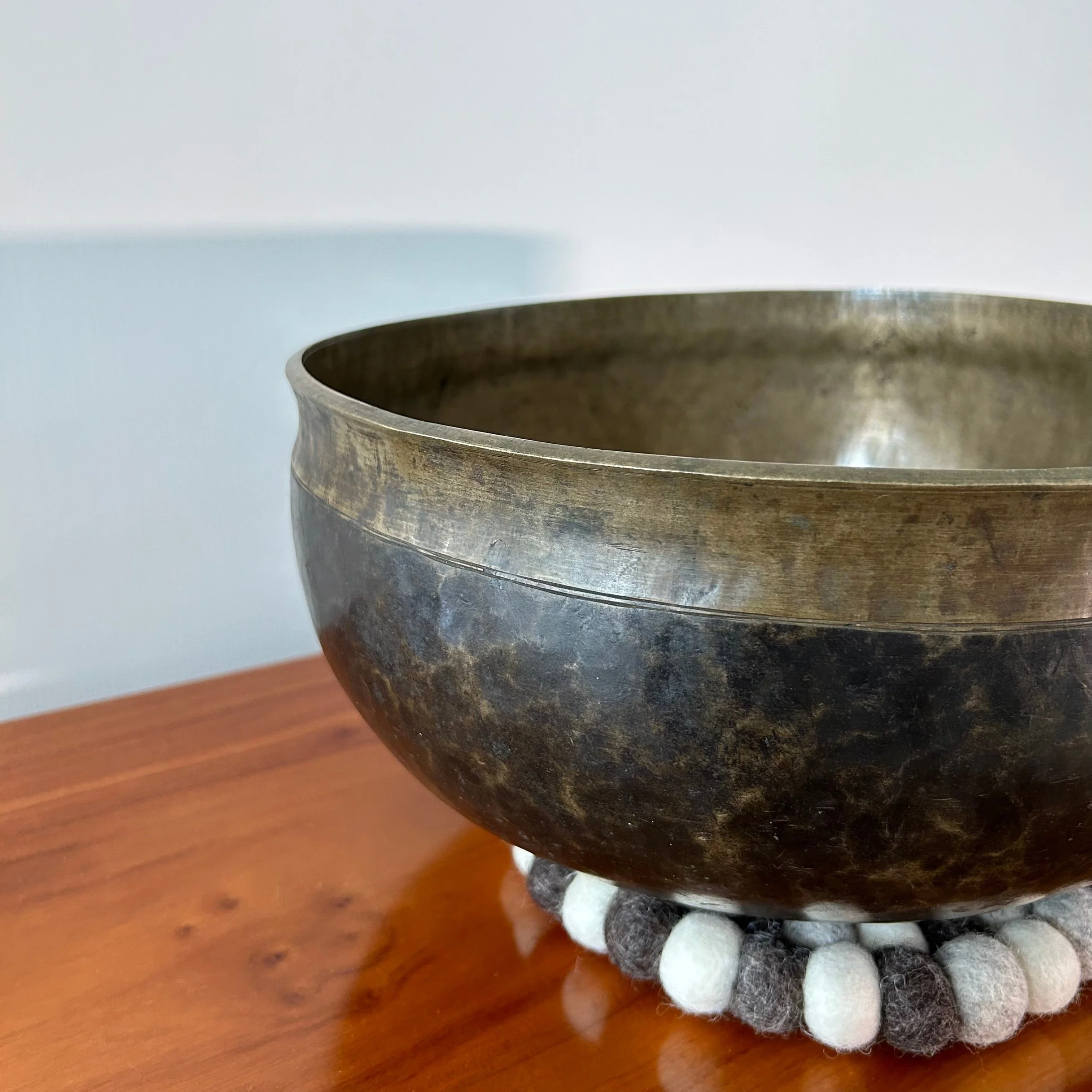
Ultabati bowls share a wide stance but feature a distinctive outward-scooping rim and contrasting dual finish. While extensive historical research suggests the Ultabati form is actually a contemporary repurposing of bowls used for food and flowers rather than a true antique instrument, their acoustic presence is undeniable. They produce a continuous, sub-bass drone akin to a physical "OM."
Listen to the provided audio clip, but note that standard recordings rarely capture their true depth.
Play them to feel the intense rim vibration physically displacing the air.
Use a soft mallet to draw out the lowest measurable frequencies of any bowl type.
Thadobati
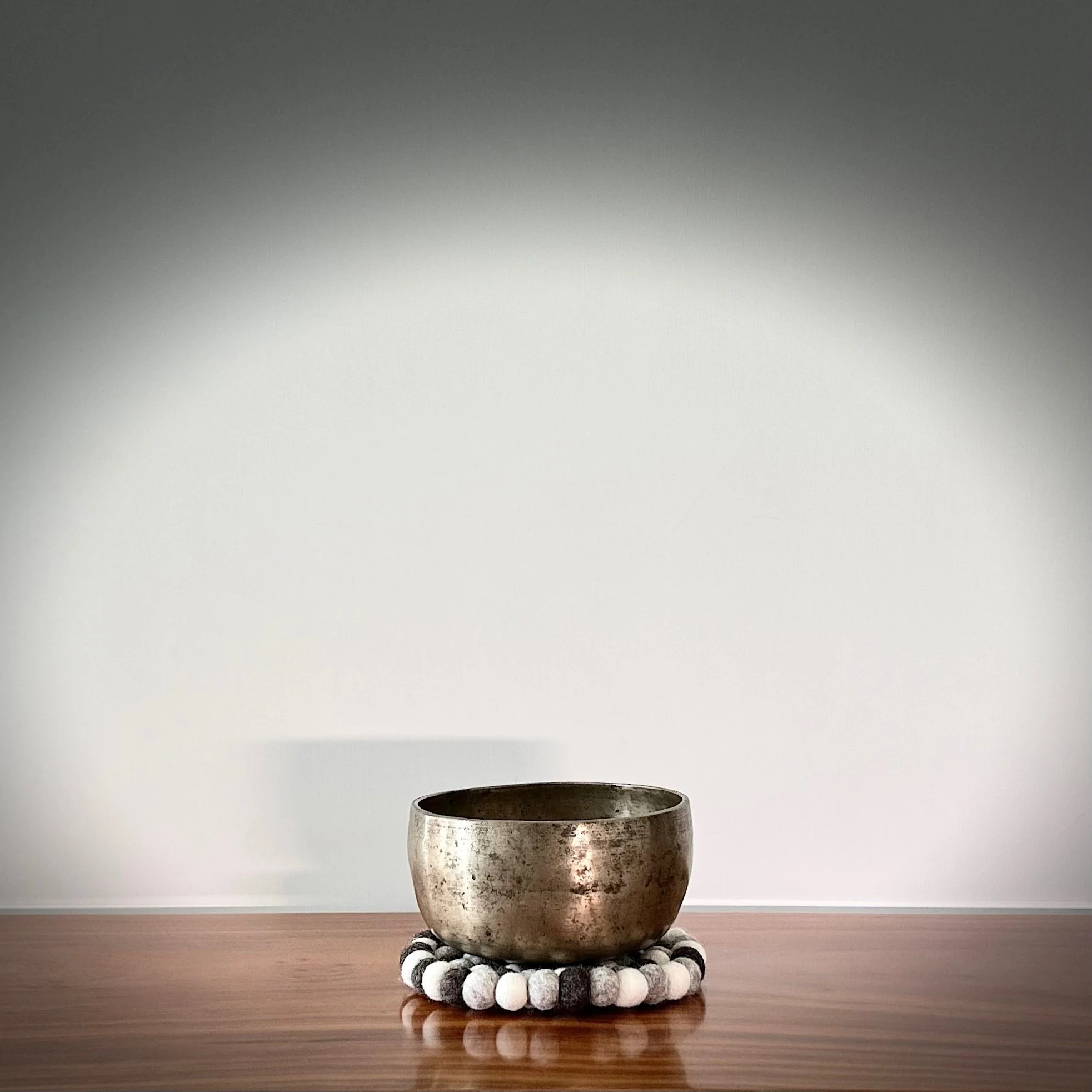
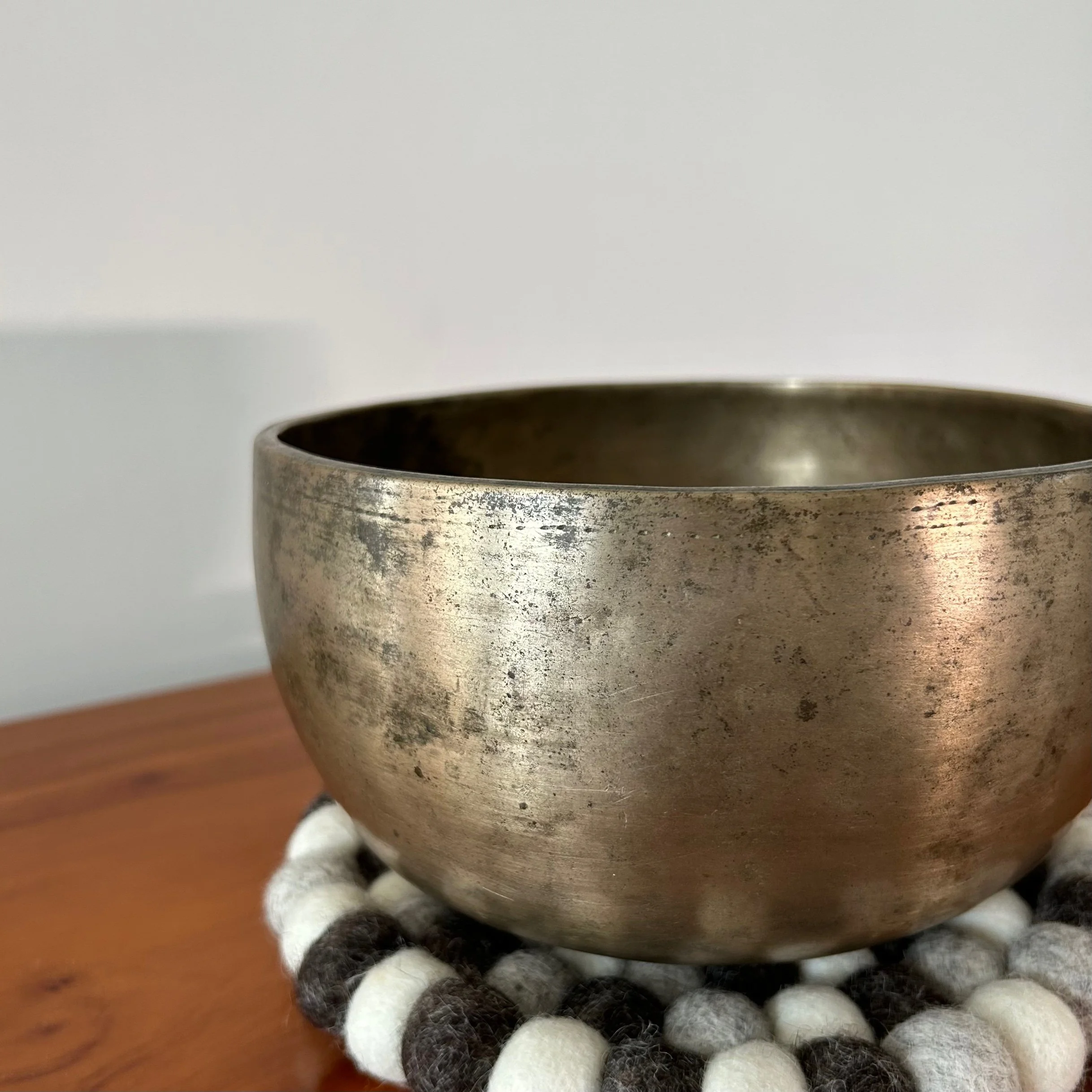
Defined by straight, high walls and flat bottoms, authentic Thadobati bowls are among the oldest surviving forms, with some dating to the 15th century. They have a wonderfully ancient feel in the hand and a remarkably long, stable sustain.
Look closely at the lip for traditional dot-punched sun symbols.
Rest these bowls flat in the palm of your hand for optimal resonance.
Play with a suede-wrapped ringer to draw out their warmth, as bare wood can muffle them.
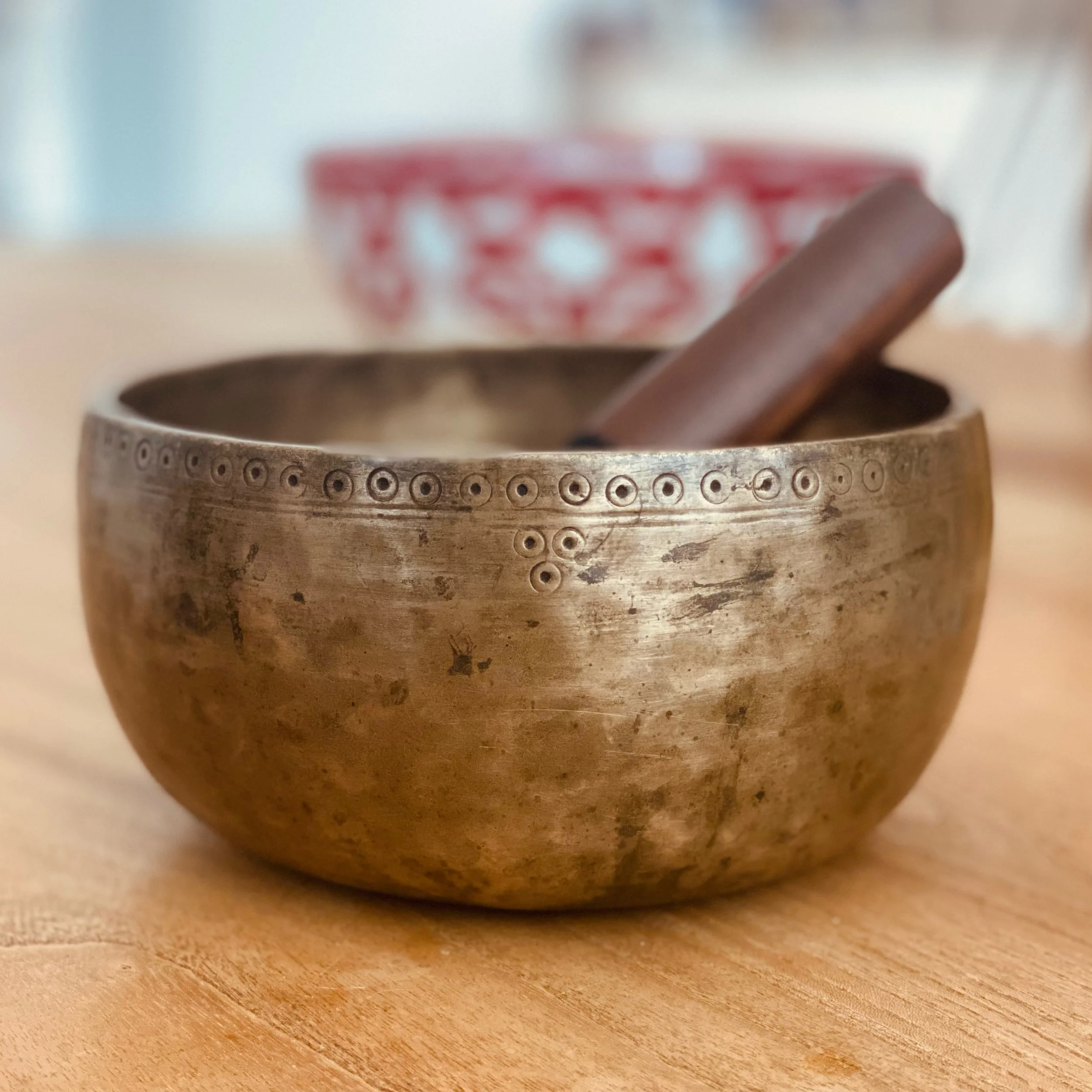
Attractive Thadobati bowl with ancient decorative motif
Mani
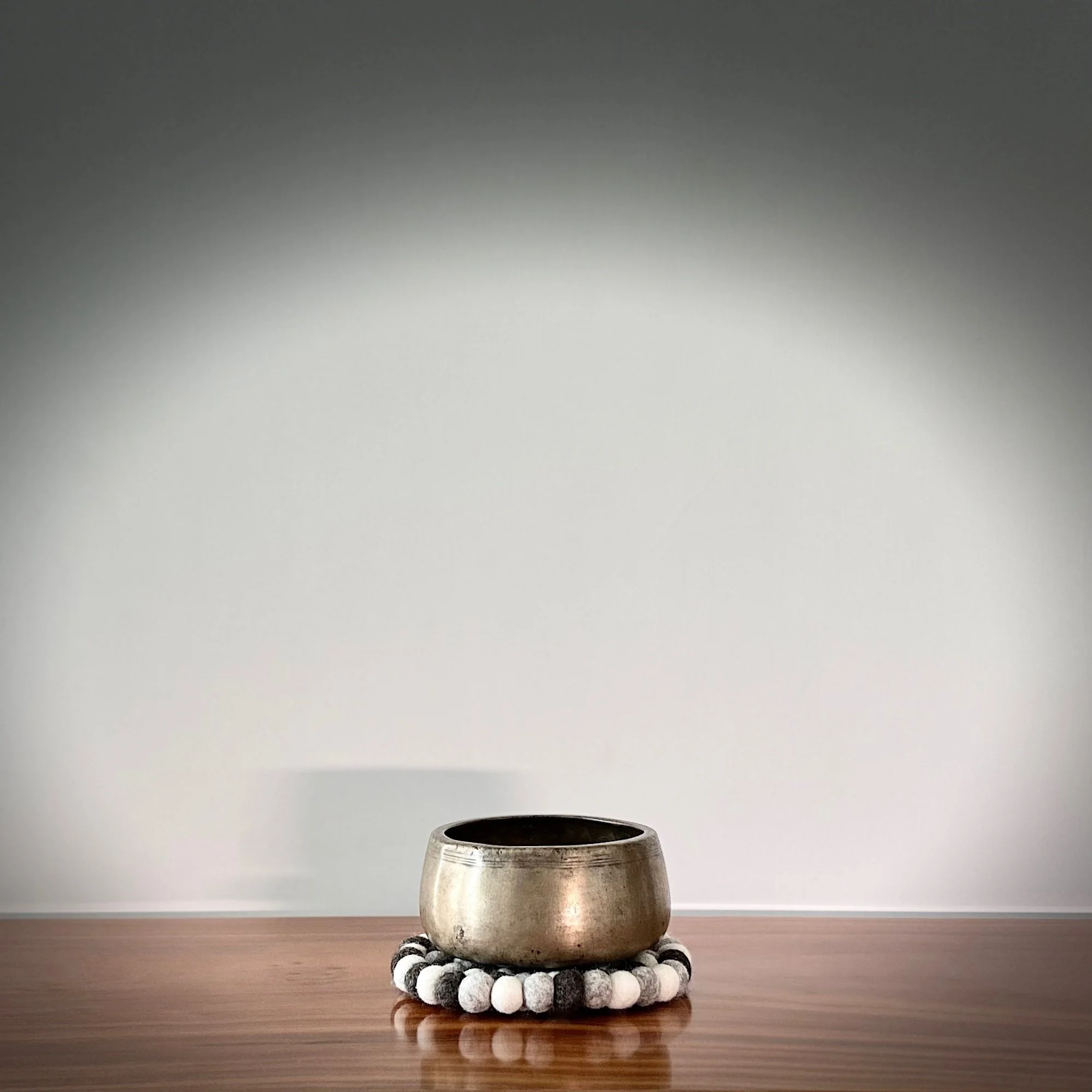
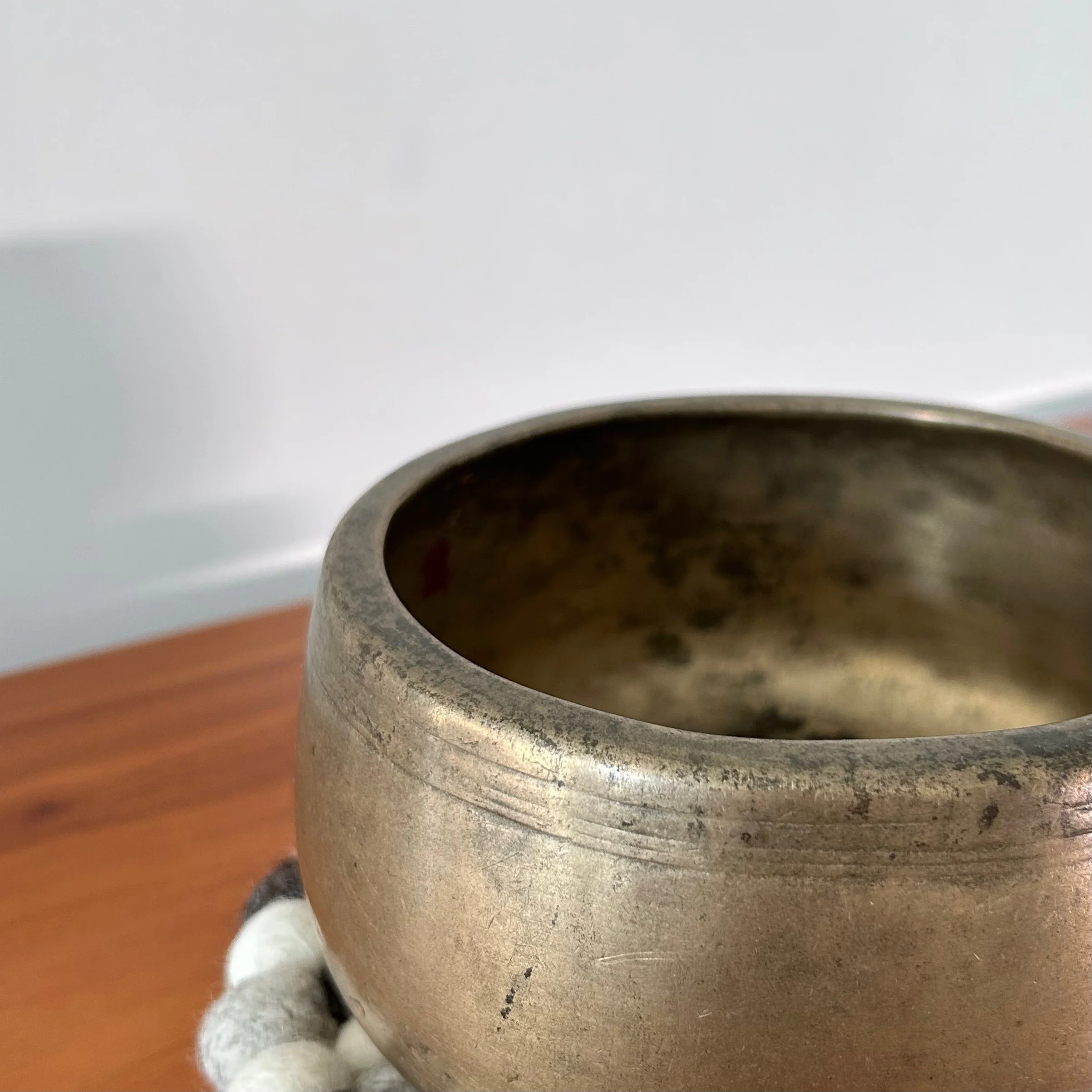
Mani bowls are rare, incredibly thick artifacts with an inward-facing lip originally meant to trap offerings. Unlike the chord-like Jambati, the spectrum image below shows how this Mani bowl produces just one visible peak. This results in a pure, highly focused fundamental note with a penetrating rhythmic oscillation.
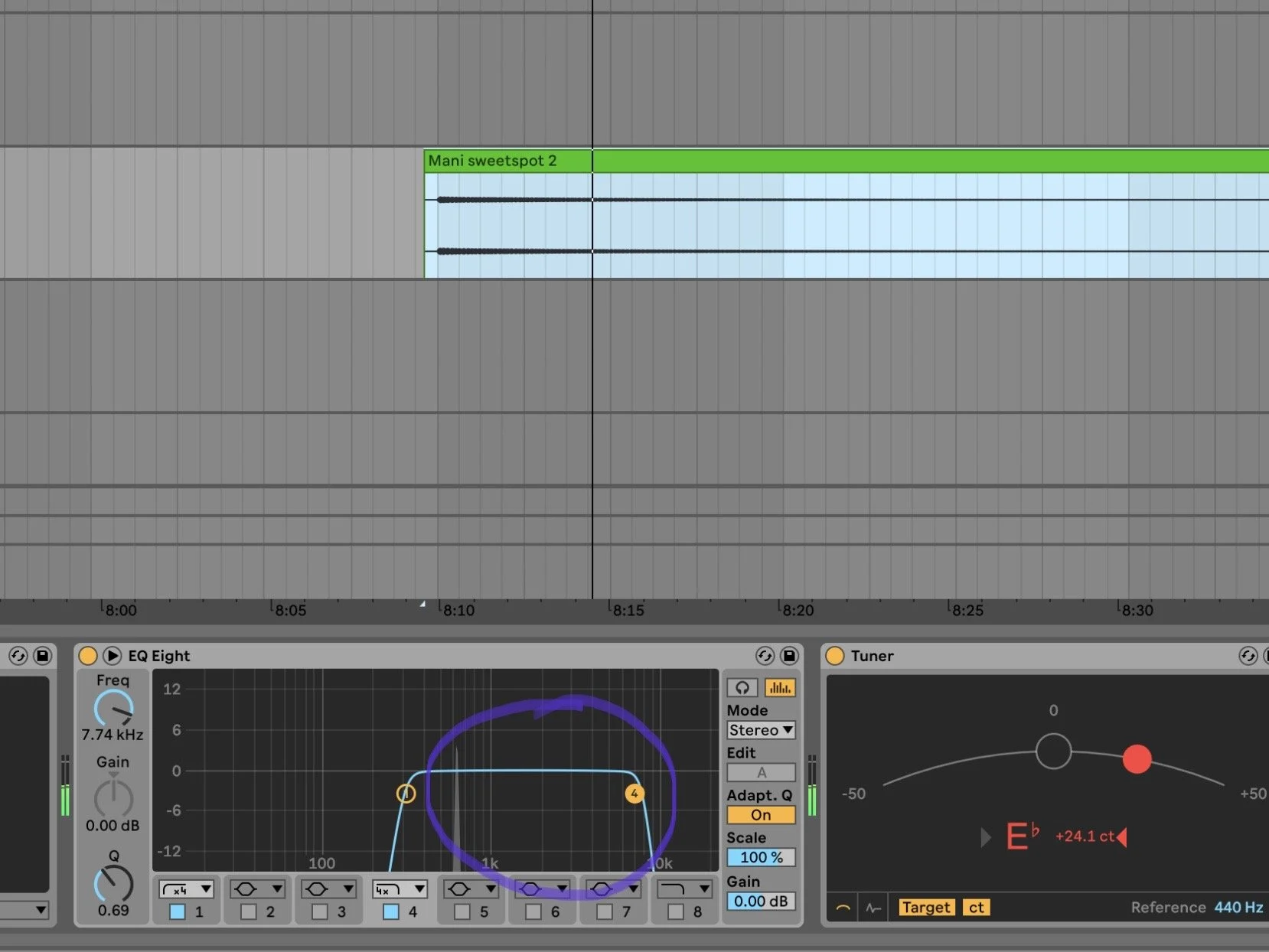
Mani bowl’s spectrum
Inscribed Mani bowls are exceedingly rare; I have only seen two in my life, and you can see one from my collection in the picture here.
Play with a bare hardwood ringer, as smooth antique rims often slip against suede.
Listen for a singular, clear pulse rather than a complex wash of overtones.
Strike them in matched pairs to generate mesmerizing binaural beats.
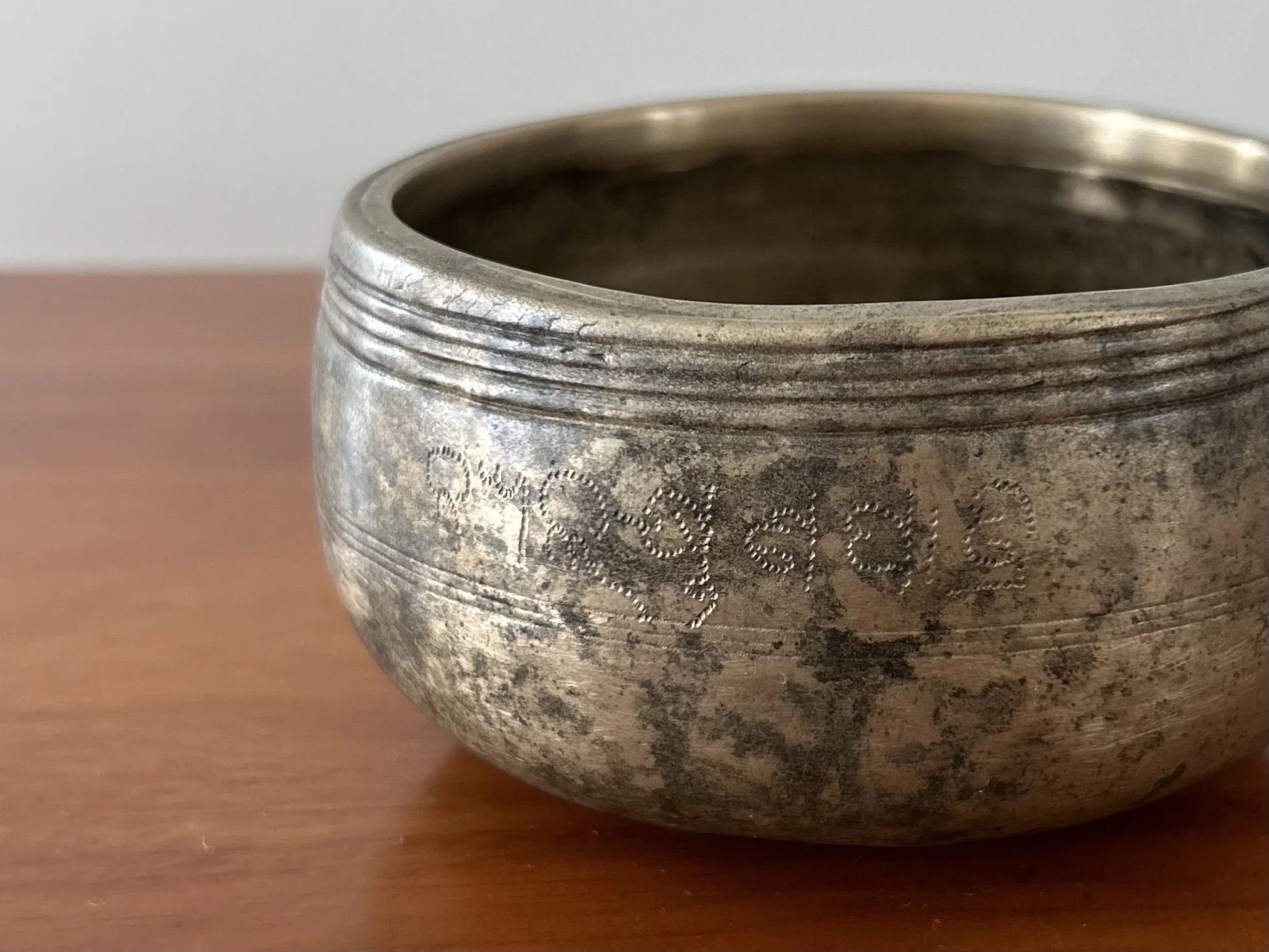
Inscribed Mani bowl
Look out for part 2, where we will explore the Manipuri, Naga, Remuna, and Lingam families.